Rainbow, An Innovative European Standard

Carbon Projects Connected to Business Realities
By focusing on geographical and sectoral proximity, Rainbow helps organizations go beyond simple “offsetting”: they contribute to financing low-carbon projects directly linked to their activities, business challenges, or local territories. This provides a concrete way to align reduction targets with contribution actions, which are often treated separately.
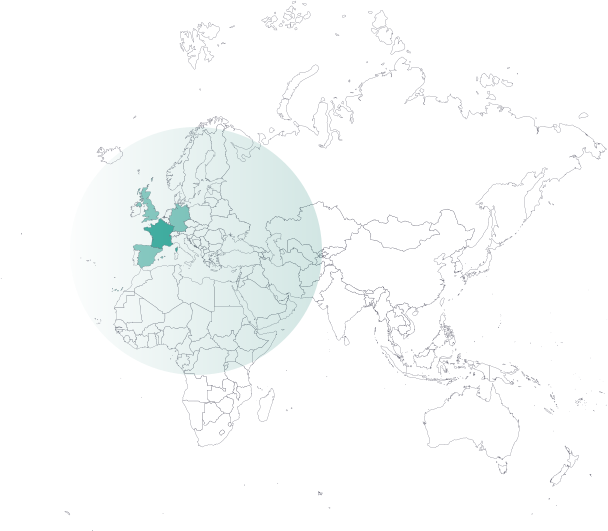
Projects certified by Rainbow are primarily located in France, but also in several European countries such as Spain, Germany, and the United Kingdom, with a few recent initiatives in Africa. Most projects focus on carbon avoidance, the circular economy, or breakthrough technologies, delivering measurable and immediate impacts while meeting verification and transparency requirements.
Carbon Market: Beyond Nature-based Solutions
When we think of carbon credits, our first reaction is often to imagine a vast reforestation project in the Amazon. In the collective imagination, a carbon project is primarily an action to sequester carbon through a nature-based approach. However, the Voluntary Carbon Market (VCM) has evolved significantly in recent years: today, there are many types of projects generating various kinds of credits, with diverse impacts that go far beyond the simple carbon metric.
Better Understanding Carbon Project Typologies
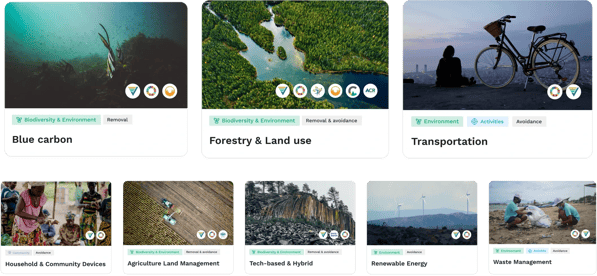
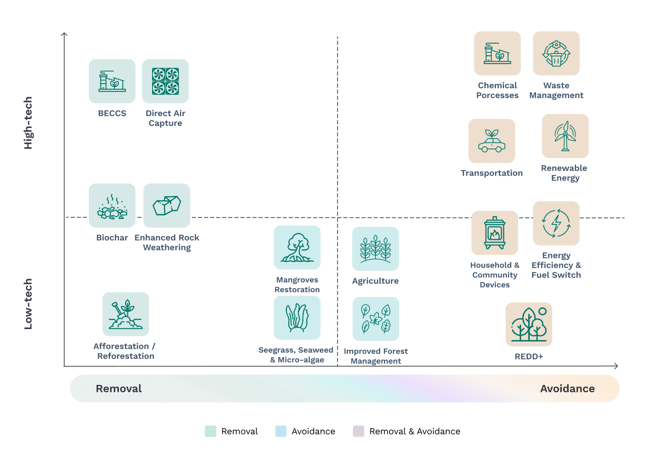
While the distinction between avoidance credits (preventing the emission of new tons of CO₂e) and carbon sequestration credits (capturing and storing existing carbon) is now well understood, differentiating between the various project typologies remains less straightforward and the importance of local anchoring is often underestimated.
To help provide clarity, ClimateSeed has published detailed guides that break down these two major families of projects:
These guides shed light on the typologies within each category and explain how both approaches should be pursued together rather than at the expense of one another as they are equally essential to any net-zero strategy.
Diverse Projects, Balanced Impacts
Beyond the type of credit, other essential dimensions must be considered in your contribution:
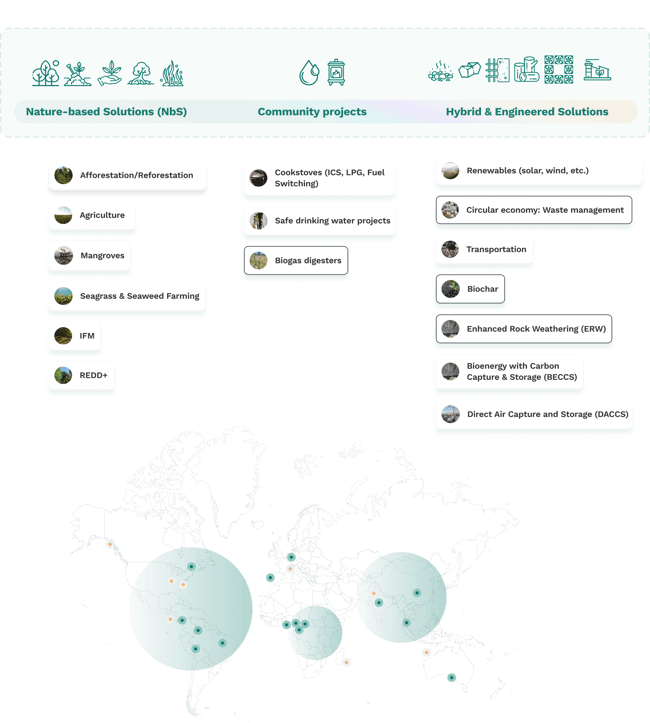
Project typology: While nature-based projects remain predominant, other typologies should also be taken into account: community, technological, or hybrid projects, whose impacts can complement those generated by nature-based action.
Impact location: The carbon market relies on a fundamental principle: one ton of CO₂e emitted at one point on the globe can be “offset” by a contribution action carried out elsewhere. This explains the historical predominance of projects in the Global South, where natural resources enable a large number of carbon actions. However, no type of project or region should be considered inherently superior to another.
Rainbow: A Rigorous & Transparent Carbon Standard
The voluntary carbon market is under pressure: increasing numbers of actors, risks of greenwashing, sometimes opaque methodologies, and legacy standards considered too cumbersome or outdated… Companies are calling for greater transparency, scientific rigor, and traceability.
Rainbow aims to provide a robust and credible framework for market participants. The standard is supported by a multidisciplinary team of scientists (engineers, PhDs, and Life Cycle Assessment experts) and public methodologies validated by competent authorities, such as the French Ministry for Ecological Transition for certain project types. Rainbow issues exclusively ex-post credits, based on measurable and auditable data. The standard is aligned with major international frameworks (SBTi, GHG Protocol, CDP) and was the first to be accepted under the new ICROA procedure. By 2026, Rainbow also aims for recognition by ICVCM, CRCF, and CORSIA, ensuring full compatibility with the world’s best practices.

 Expert Insight
The players driving the climate transition are constantly adapting. Rainbow embodies a new generation of carbon standards: agile, rooted in local realities, and designed to turn climate contribution into a true lever for action. Complementing this, ClimateSeed supports organizations in building balanced carbon portfolios, integrating coherent projects that maximize impact, reduce risks, and optimize costs.
Iléana Perey
Carbon Project Analyst
Transforming biomass into Energy & Stable, Carbon-rich Material
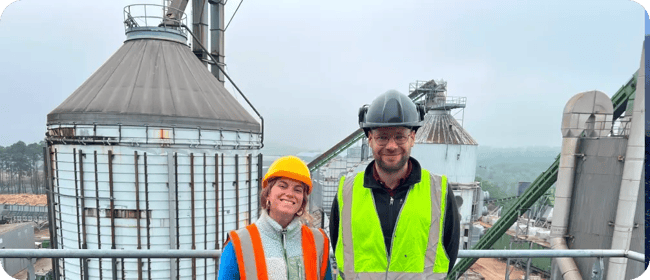
In September 2025, we visited Soler’s biochar and charcoal production plant in Gyé-sur-Seine.
 Industrial Process & Energy Autonomy
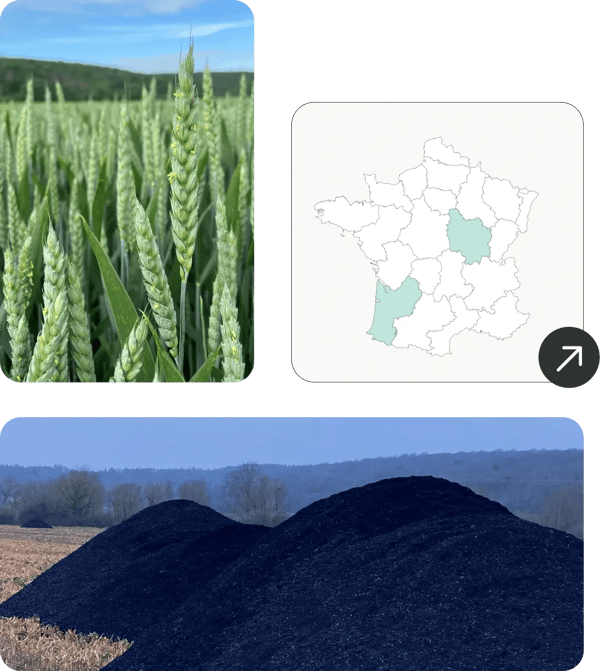
The core of this project is based on the pyrolysis process: a technological method that heats biomass to high temperatures in the absence of oxygen to produce a stable, carbon-rich material.
In this project, the supply is local and fully traceable: the biomass is meticulously tracked through an application that records its origin and transportation distance. It consists of 80% thinning wood from managed forests and 20% non-recoverable sawmill residues.
 Energy Conversion Process
The plant operates seven days a week. The process is energy self-sufficient and even generates renewable electricity through the syngas produced, which is used for cogeneration.Industrial Steps
The industrial process includes the following stages: pre-treatment, grinding (adjustable), silo drying (using heat generated on-site), and finally pyrolysis.
Production, Usages & Impact
Thanks to its three production sites in France, the Soler project demonstrates a tangible economic and environmental impact:Employment
The Gyé-sur-Seine plant employs 78 people (180 jobs created in total, including the second site in the Landes).Annual Production
The project produces 50,000 tons of charcoal each year, of which 5,000 tons are converted into biochar.
Carbon Financing
Carbon financing helps make biochar more accessible by selling it at a more affordable price than biochar not supported by carbon financing.
Biochar End-Users
Biochar is sold to farmers, substrate manufacturers, local authorities, and construction stakeholders at a price more affordable.
By-Product Utilization
The project also valorizes several co-products, such as compost (from mosses), phosphorus-rich ashes (for agriculture), and domestic logs (produced from grinding residues).
 Biochar in France
This project helps to make the use of biochar more widespread through carbon financing. With its three production sites in France, the project produces 50,000 tonnes of charcoal each year, of which 5,000 tonnes are converted into biochar.
The biochar is then sold to farmers, substrate manufacturers, local authorities, and construction stakeholders at a price more affordable than biochar not supported by carbon financing. The biomass supply is local and sourced from sustainable channels, ensuring a controlled environmental impact. Biochar thus represents a cutting-edge solution that combines renewable energy production, local job creation, and stable carbon sequestration.
Giving materials a second life to reduce the carbon footprint
Since 2017, the Cycle Up project has provided a circular-economy solution aimed at democratizing the reuse of materials in the construction sector. Construction generates 2.24 million tonnes of waste, with only 1% being reused. Scaling up material reuse in construction helps reduce the carbon footprint of building activities, decrease waste generation, and create local jobs.
The project has three main objectives:
Reduce carbon emissions (avoiding impacts linked to the destruction of materials and the manufacture of new components);Save resources;
Avoid waste generation.
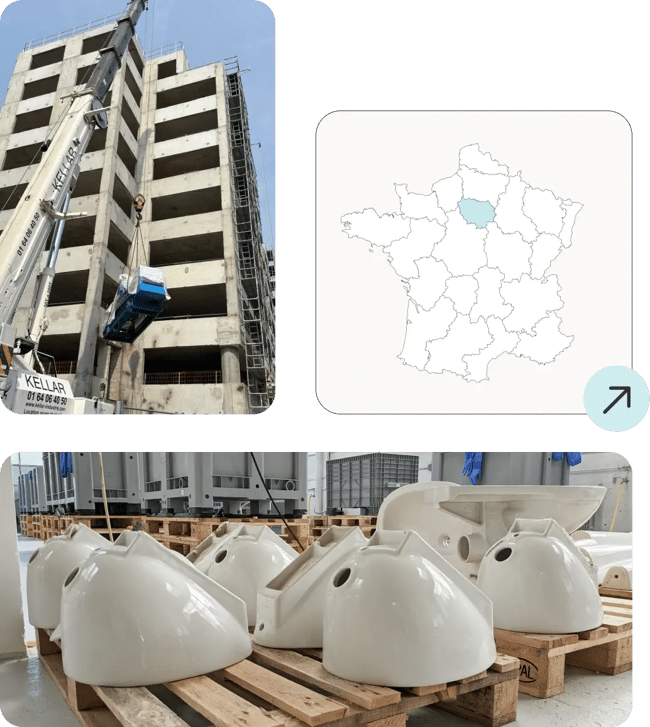
Specifically, the activity involves recovering and reusing materials from construction sites (mainly sanitary fixtures). Without heavy industrial processing, these items are given a second life, reducing their environmental impact and contributing to the development of a local reuse-based economy.
Refurbishing of Sanitary Equipment
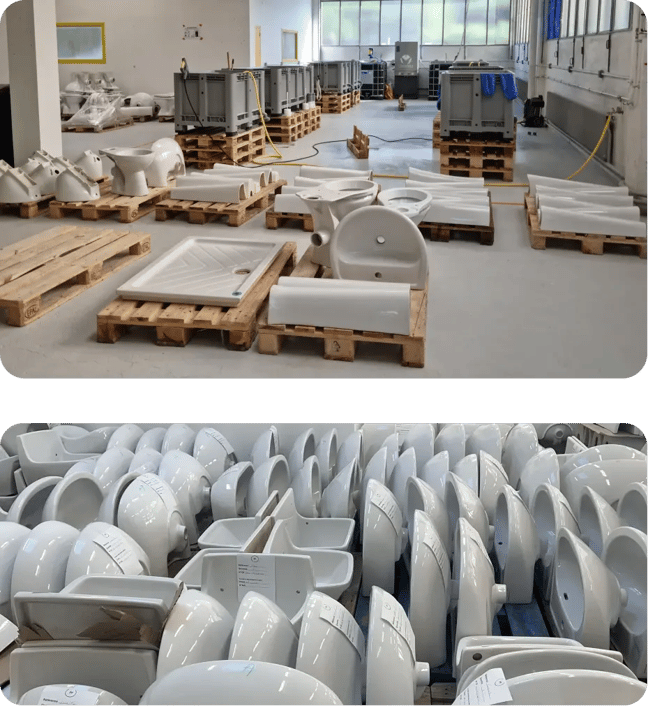
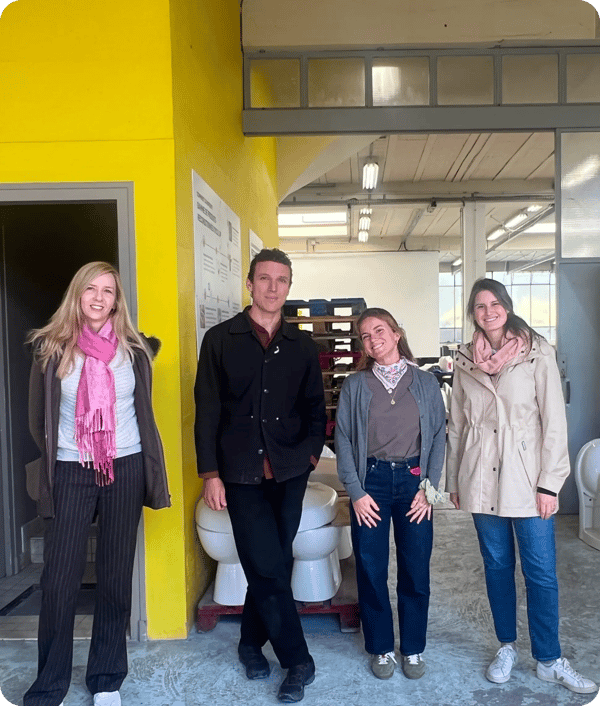
Last September, we visited Cycle Up’s reuse workshop in Noisy-le-Sec, focusing on their current main activity: refurbishing sanitary products..Operational Process
The full refurbishing cycle lasts 3 to 6 months and includes removal, transport, collection, rinsing, finishing, and strict quality control.
Volumes
The warehouse holds 600 to 700 items, with around 100 items processed per week. Approximately 3,000 items were sold in 2025, compared to 60,000 items sold annually by appliance distributors.
Clients
The customer base is diverse, including social housing, offices, hotels, and schools.
Bénéfice Carbone
Each toilet accounts for 140 kg of CO₂, with 70 kg saved through refurbishing. Each day, each employed technician saves 0.5 tonnes of carbon.
Perspectives & Développement
For its development, Cycle Up needed its carbon impact to be measurable and marketable. Rainbow developed the methodology that allows them to calculate the carbon savings achieved through reuse. Carbon finance is essential for their industrialization, expansion, and diversification.Industrialization
Cycle Up needs carbon finance to scale up. They need to refurbish more materials and therefore industrialize production (equivalent to approximately 6,000 carbon credits sold).Expansion
Cycle Up aims to open new franchised workshops in Lille, Lyon, and Bordeaux to expand and be closer to construction sites. This is possible by selling approximately 2,000 carbon credits. These openings will create 10 to 20 jobs in 2026 alongside social integration projects.
Diversification
The project aims to diversify its offerings beyond sanitary products. Without dedicated funding to open new sectors, they rely on the sale of carbon credits (equivalent to approximately 17,000 carbon credits sold).
Giving materials a second life to reduce carbon footprint
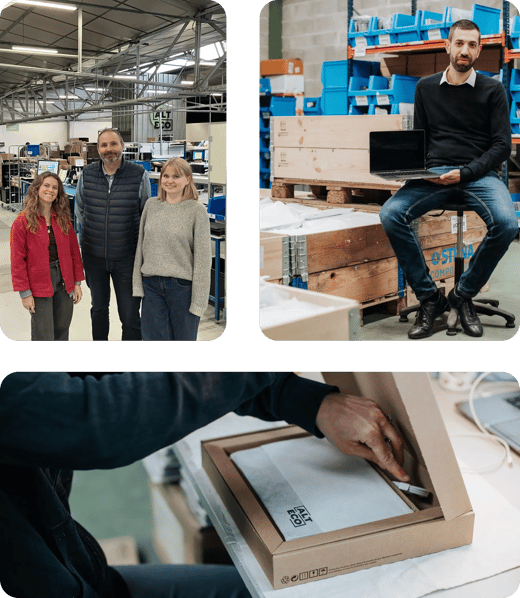
Last October, we visited ALT Eco’s IT refurbishing plant located in Caluire-et-Cuire, near Lyon.
 Circular Economy & Avoidance Carbon Credits
ALT Eco’s project is an IT refurbishing initiative. It is an excellent example of a circular economy project certified by Rainbow. It offers a refurbishing solution focused on component replacement and the manual repair of a wide range of electronic devices, adapting to the specific needs of each product.
Innovation & Technical Expertise
The plant includes a Research and Development (R&D) laboratory dedicated to the continuous improvement of repair speed and accuracy. Unlike the production of new items, which is largely automated, the refurbishing process remains manual, ensuring expert human intervention.Flow Management & Logistics
→ The teams operate according to purchase orders that require constant adaptation between the availability of parts and customer demand.
→ Spare parts are supplied from a network of vendors (with daily truck deliveries), which must be coordinated with the orders to be fulfilled for reseller customers (electronic distributors and marketplace platforms).
→ Once the device is refurbished into a finished product, it is shipped with a detailed report of the replaced parts, ensuring transparency and traceability.
Environmental Impact
The project generates carbon avoidance credits by distributing refurbished products. The avoidance is calculated by comparing it to the production of new products, which requires resource extraction, including rare materials.
Social Impact & Employment
The project stands out for its strong and consistent social commitment:Local Employment
ALT Eco enables the creation of around one hundred local jobs. Its purchasing policy prioritizes, whenever possible, partners operating at the local, national, or European level. For example, part of its packaging is produced approximately twenty kilometers from the refurbishment workshops.
Recruitment also follows this local approach: ALT Eco works in particular with the Mission Locale to meet its staffing needs.Professional Integration
Most employees are trained on site. This approach promotes the professional integration of people who are far from the labor market, notably through partnerships with regional correctional facilities to train inmates. ALT Eco is one of the French companies certified with the PEPS label (Produit en Prison).
Overall, the project stands out for its consistency and strong commitment to generating positive environmental and social impact.


Businesses

Maturity Level

Multi-Sector
Ferrari
The sustainable community & innovative initiative project
ChangeNow
The biggest event organized for the planet
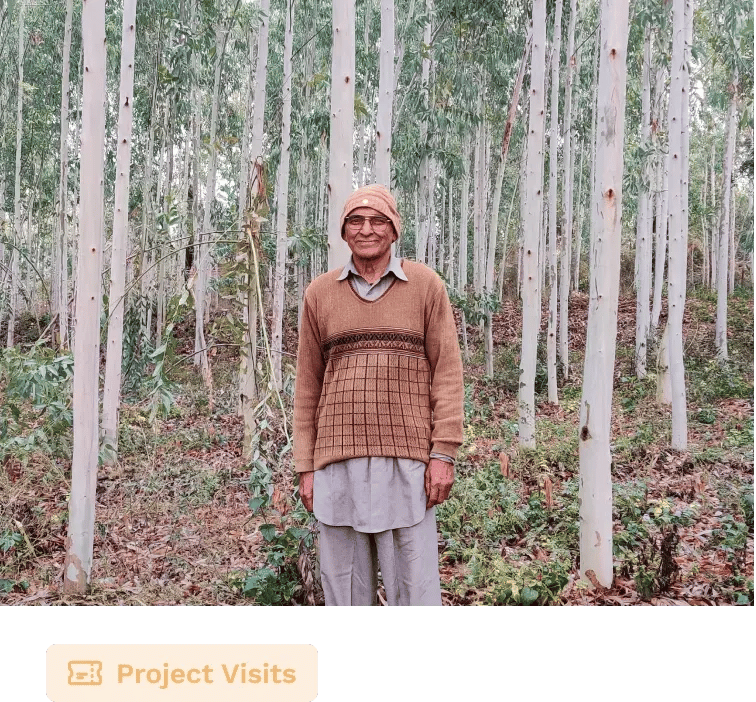
Agroforestry in Punjab
Discover our visit in India
Women's forum
Highlight the link between climate change and gender equality
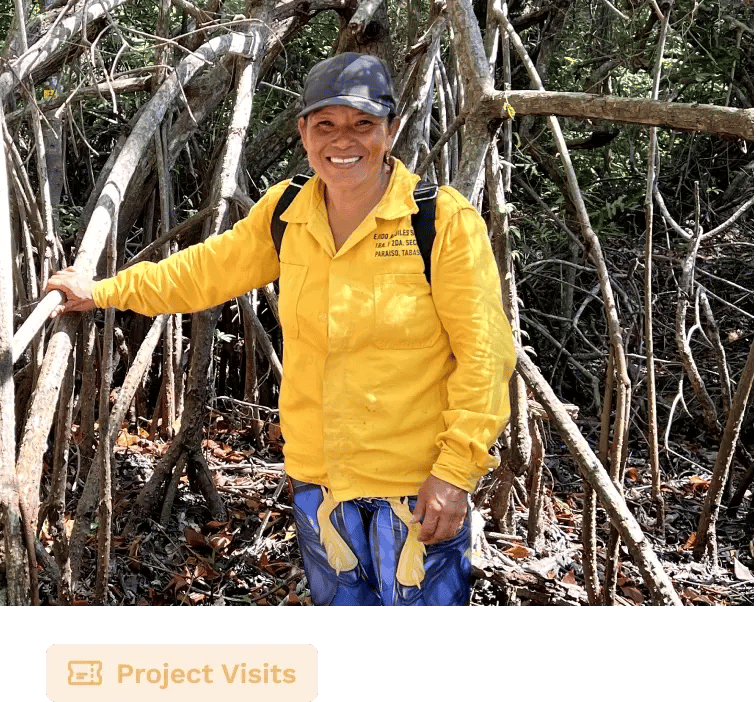
Mangrove Conservation
& Restoration in San Crisanto
Wool and the Gang
The company with a unique approach to craftsmanship
EuroAirShip
A sustainability trailblazer in aviation
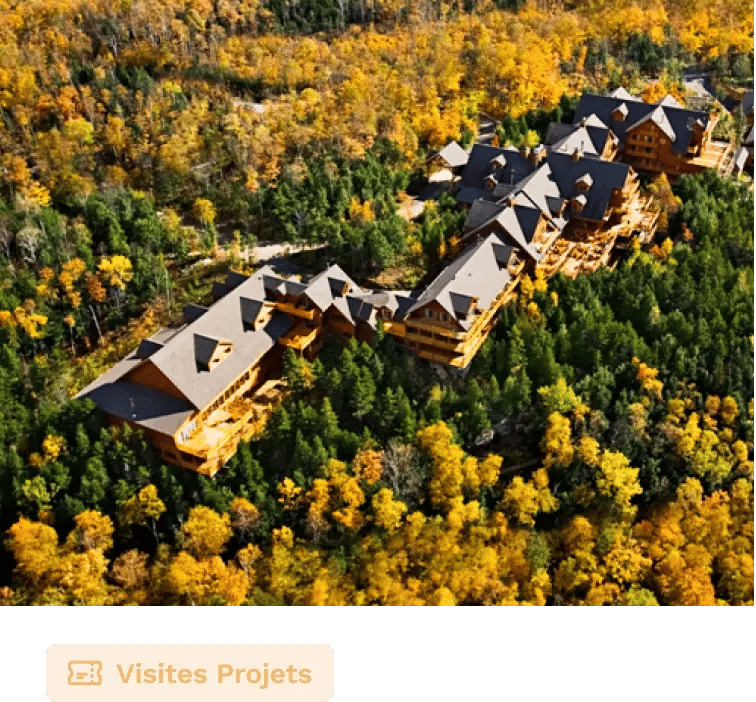
Will Solutions
Sustainable community project in Canada