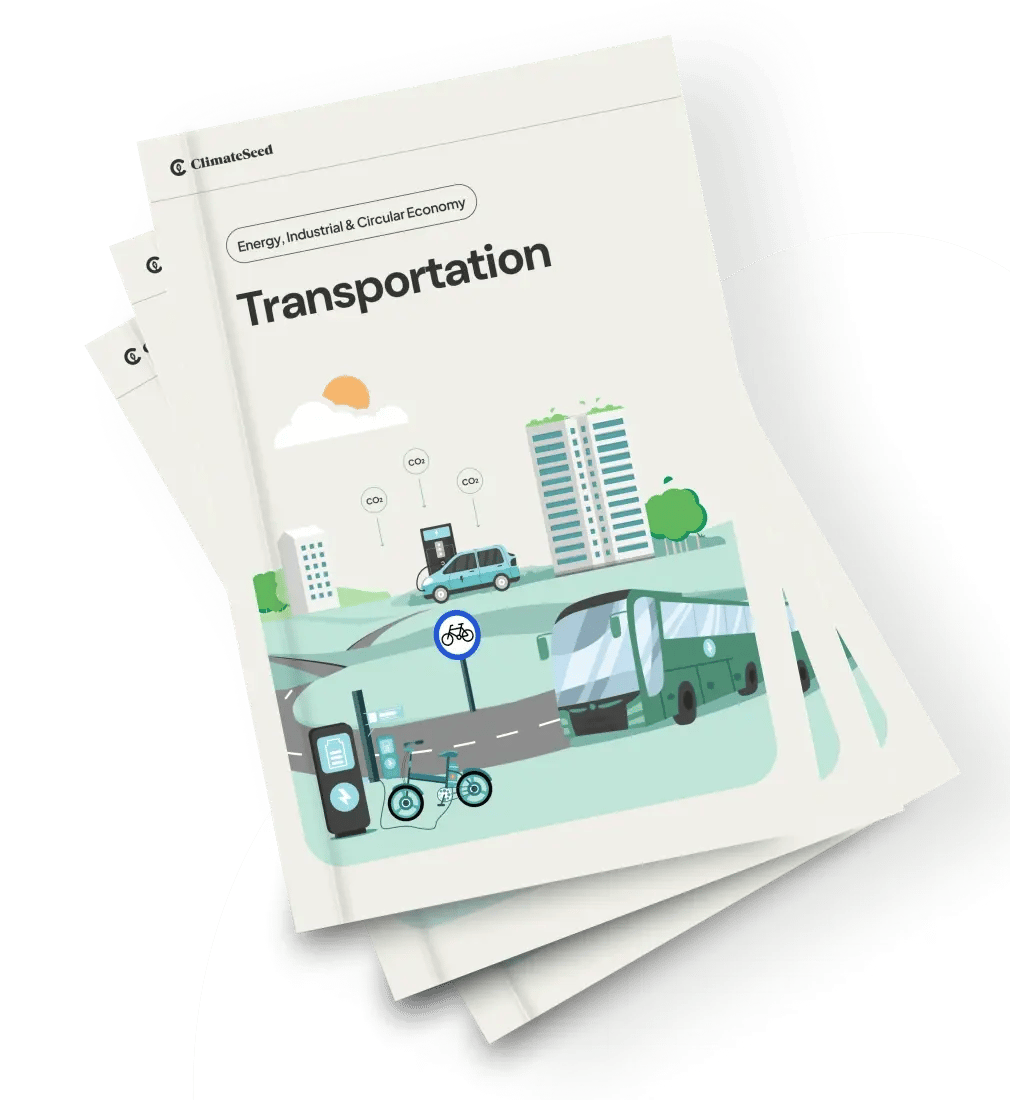
Transportation
 Carbon Avoidance
Energy, Industrial & Circular Economy Projects for Corporate Net-Zero Strategies
The transportation sector is one of the largest contributors to global greenhouse gas emissions, primarily driven by the combustion of fossil fuels in road vehicles, aviation, shipping, and rail. Despite gradual efficiency improvements and the emergence of cleaner technologies, transport remains heavily dependent on fossil fuels, making it a critical focus area for climate mitigation. Transportation projects are bridging this gap by democratizing sustainable mobility and fostering the transition to low-emission alternatives, such as electric vehicles and bicycles.


 Projects in Global Portfolio
 Locations

Company impact
By integrating transportation projects as part of a broader portfolio of high-quality climate projects, companies can contribute through Ongoing Emissions Responsibility (OER) approaches while expanding clean mobility access, unlocking new household and commercial economic opportunities by strengthening urban resilience against mobility crises.
Maximizing Sustainable Impact through Transportation
 Emission reduction type: Avoidance
 Risk of reversal: Low
 Permanence: Years to decades
 Price range: From €15 to €50
Transportation carbon projects and carbon credits play an increasingly important role in accelerating the shift toward low-carbon mobility. These projects aim to reduce or prevent emissions at the source by encouraging behavioral change, improving transport systems, and replacing high-emission modes with cleaner alternatives. Examples include public transport improvements, electric and shared mobility systems, cycling infrastructure, and logistics optimization in both urban and rural contexts.
By reducing reliance on conventional fossil-fuel-based transport, these projects help avoid emissions that would otherwise enter the atmosphere while also delivering broader co-benefits, such as reduced air pollution, improved public health, decreased congestion, and more efficient land use. Beyond their direct climate impact, they contribute to more resilient and inclusive mobility systems, supporting long-term sustainable development and helping reshape how people and goods move within and between cities and regions.


Driving Clean Energy Access & Community Development
Transportation projects generate co-benefits that strengthen air quality and improve energy efficiency.


Environmental
Joint efforts to reduce greenhouse gas emissions and improve air quality.

Social
Improve energy efficiency, optimize infrastructures and increase accessibility to sustainable transport systems.
Why Integrate Transportation Projects into your Corporate Climate Strategy?
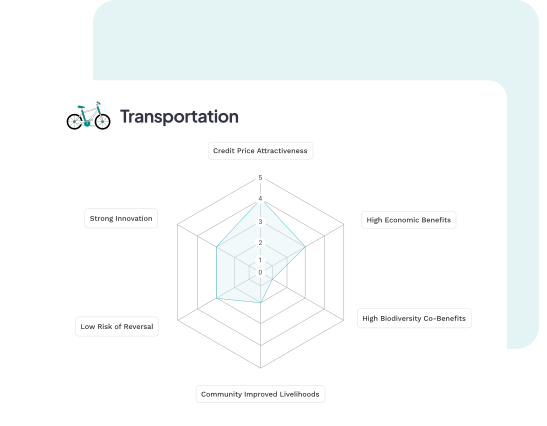
Integrating transportation projects into a broader climate contribution strategy enables companies to support meaningful, scalable climate action in one of the highest-emitting sectors. By supporting solutions that reduce emissions and accelerate the shift away from fossil fuel dependency, these projects contribute to more efficient and lower-carbon mobility systems. They also improve transport efficiency and air quality while supporting system-wide transformation through solutions such as electrification and alternative mobility, although their biodiversity and community livelihood co-benefits are generally more limited.
For companies, these projects provide an opportunity to support essential solutions for climate action and the transition toward lower-carbon transport systems. Their contributions help accelerate cleaner mobility, reduce reliance on fossil fuels, improve air quality, and strengthen the resilience and sustainability of transportation systems.

 Expert Insight
Transportation carbon projects offer companies a concrete way to support the decarbonization of the mobility sector and advance their climate strategies. By enabling the shift to low-carbon transport and cleaner mobility options, they help reduce emissions, cut fossil fuel dependence, and improve urban air quality. Beyond emissions reductions, these projects strengthen climate credibility, support sustainability reporting, and contribute to more efficient and resilient transport systems while fostering innovation in sustainable mobility.
Alessandra Souroujon
Head of Project Portfolio
Electrification of Vehicles
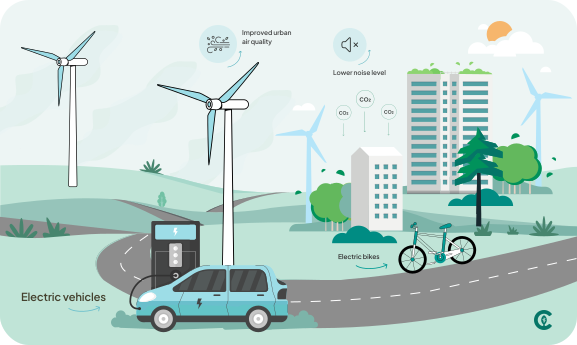
Electric vehicle charging infrastructure and associated enabling systems support the adoption of electric mobility. These projects reduce greenhouse gas emissions by displacing internal combustion engine vehicles and the associated reliance on fossil-fuel-based transport. Electric vehicles eliminate tailpipe emissions, significantly lowering air pollution and noise levels in urban environments.
Beyond direct emission reductions, increased adoption of electric mobility supports the integration of renewable energy into the electricity grid by enabling greater demand for low-carbon electricity, thereby strengthening the broader energy transition.

Alternative Mobility
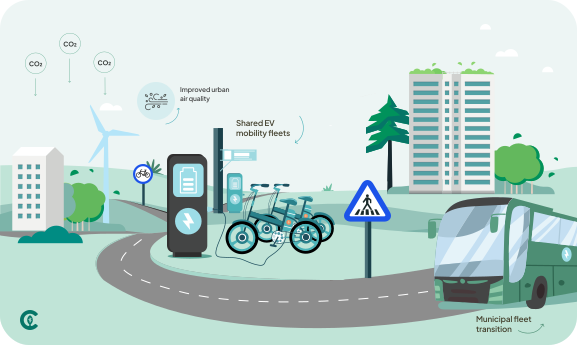
Alternative mobility refers to projects that promote a shift toward low-carbon two- and three-wheeled transport in urban areas, including the development of cycling infrastructure, parking facilities, and shared mobility stations.
These interventions reduce reliance on fossil-fuel-based transport, alleviate urban congestion, and improve air quality. Beyond climate mitigation, they support more efficient use of urban space and contribute to the development of more sustainable and accessible mobility systems within cities.
Project Example

Alternative Mobility in Rio de Janeiro
Carbon Avoidance Transportation
The project expands bike-sharing infrastructure in Rio de Janeiro to reduce transport emissions, improve air quality, and serve as a model for sustainable cycling mobility across Latin America.