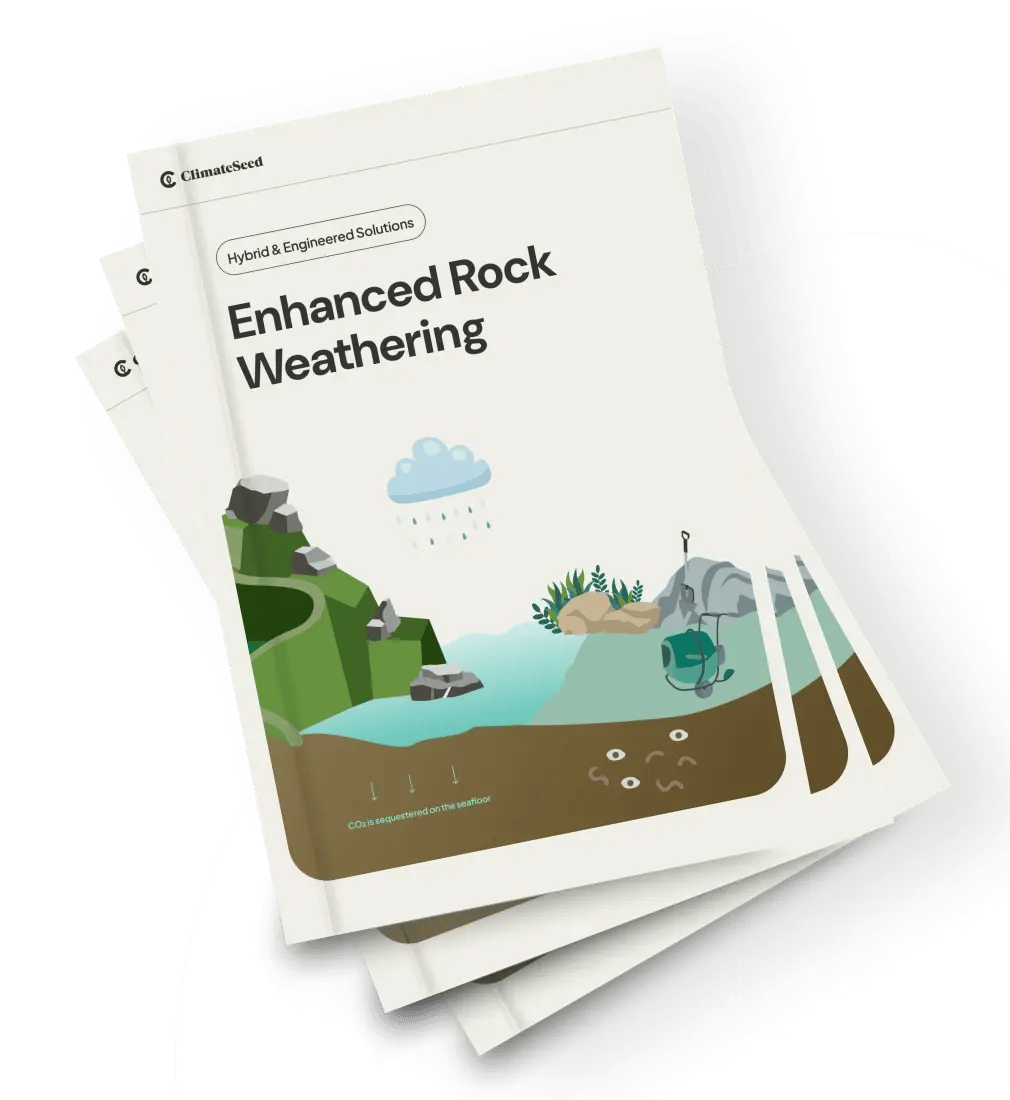
Enhanced Rock Weathering
 Carbon Removal
Hybrid & Engineered Solution Projects for Corporate Net-Zero Strategies
A growing set of carbon removal approaches relies on engineered and hybrid methods designed to achieve long-term or permanent carbon storage. One of the most promising of these is Enhanced Rock Weathering (ERW). In natural systems, silicate rocks gradually absorb CO₂ over geological timescales; ERW accelerates this process by crushing rocks into fine particles and applying them to agricultural land. When exposed to rainwater and atmospheric CO₂, the minerals react to store carbon in stable forms over long timescales, with potential benefits for soil health.
 Projects in Global Portfolio
 Locations

Company impact
By integrating ERW projects into a broader portfolio of high-quality climate projects, companies can contribute through Ongoing Emissions Responsibility (OER) approaches while supporting long-term CO₂ removal, improving soil health and agricultural productivity, and creating additional income opportunities for farmers.
Maximizing Sustainable Impact through Enhanced Rock Weathering
 Emission reduction type: Removal
 Risk of reversal: Low
 Permanence: 100-1,000 years
 Price range: From €200 to €500
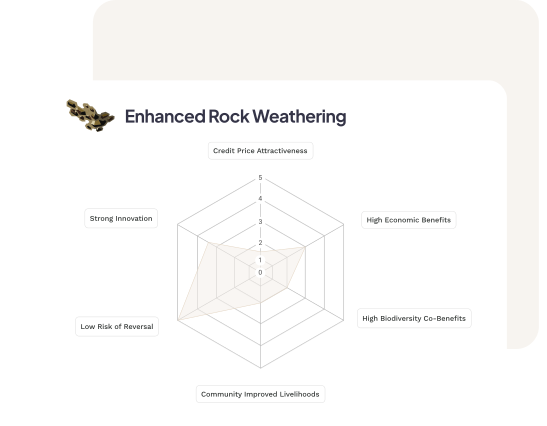
ERW is a carbon removal approach that accelerates the natural weathering process, a slow geological mechanism in which rainwater absorbs atmospheric CO₂ and reacts with exposed rocks, gradually locking carbon away as stable minerals over millions of years. ERW speeds up this process by crushing silicate rocks, such as basalt, into fine particles and distributing them across large surfaces, including agricultural land.
When exposed to rainwater and soil moisture, these minerals react with dissolved CO₂, forming stable carbonate compounds that store carbon for thousands of years. In this way, ERW shifts a process that would naturally occur over geological timescales into a managed intervention that operates over years to decades. As a carbon removal pathway, these projects focus on actively drawing down atmospheric CO₂ through durable, mineral-based storage.

Enhancing Soil Health & Agricultural Productivity
ERW projects generate co-benefits that improve soil health and agricultural productivity.


Environmental
ERW accelerates a natural process that permanently removes CO₂ from the atmosphere by locking it into stable minerals, contributing to long-term climate mitigation.

Social
It can improve soil health and agricultural productivity, supporting farmers’ yields and creating additional income opportunities through engagement in carbon removal projects.
Why Integrate Enhanced Weathering Projects into your Corporate Climate Strategy?
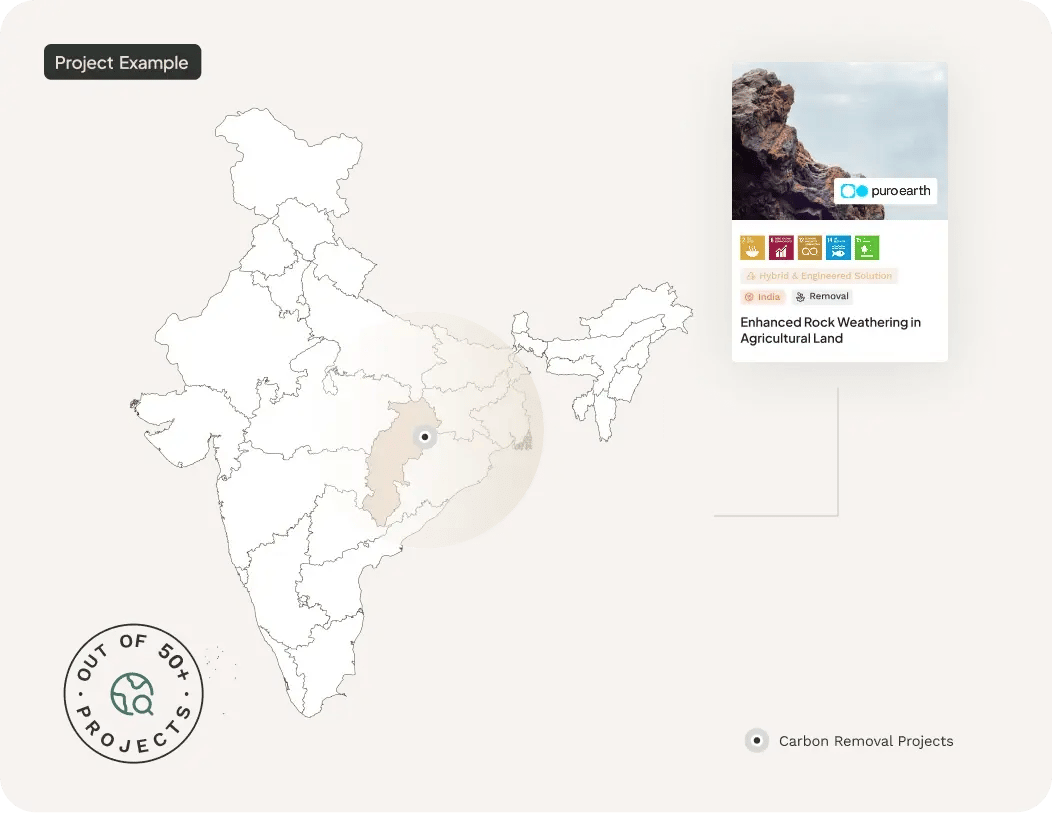
Integrating Enhanced Rock Weathering (ERW) projects into a broader climate contribution strategy enables companies to support innovative, long-term carbon removal solutions. By accelerating the natural weathering of silicate rocks, these projects remove CO₂ from the atmosphere and store it in stable mineral forms over long timescales. They can also improve soil health and agricultural productivity, although their biodiversity and community livelihood co-benefits may be more limited compared to other project types.
For companies, these projects provide an opportunity to support emerging carbon removal technologies and contribute to the development of a diverse portfolio of high-quality climate projects. Their contributions help advance durable CO₂ removal, support agricultural resilience, and foster innovation in climate solutions aligned with long-term climate goals.

 Expert Insight
ERW projects offer companies a credible way to support durable carbon removal while helping scale an innovative climate solution. By accelerating natural mineral processes, they permanently remove CO₂ from the atmosphere and store it for thousands of years. Beyond carbon removal, these projects can improve soil health and strengthen agricultural resilience, enabling companies to contribute to both long-term climate action and sustainable land management.
Alessandra Souroujon
Head of Project Portfolio
Project Example
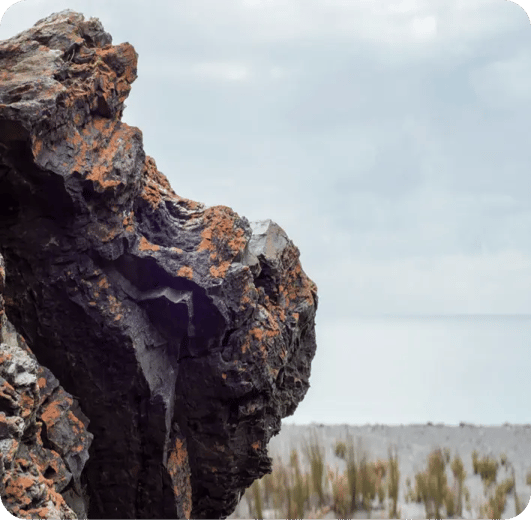
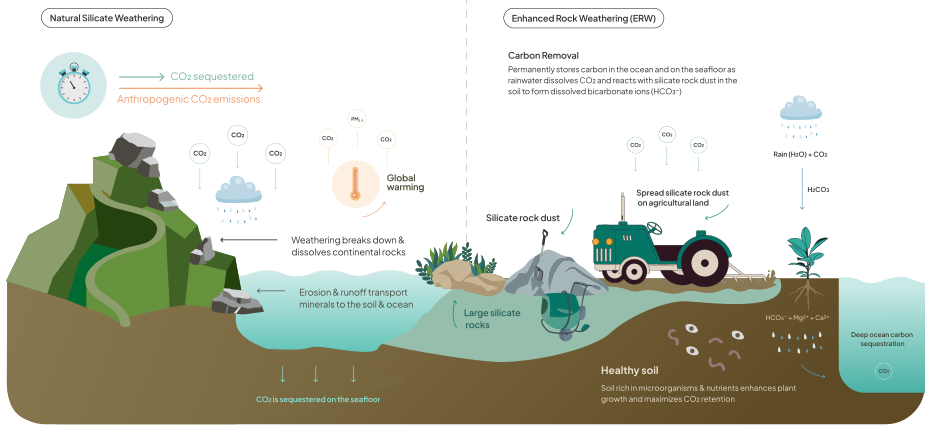
Enhanced Rock Weathering in Agricultural Land
Carbon Removal Enhanced Rock Weathering 
The project accelerates natural rock weathering by applying crushed basalt to agricultural land, where it reacts with rainwater and atmospheric CO₂ to permanently store carbon as bicarbonate for over 100,000 years while also improving crop yields.