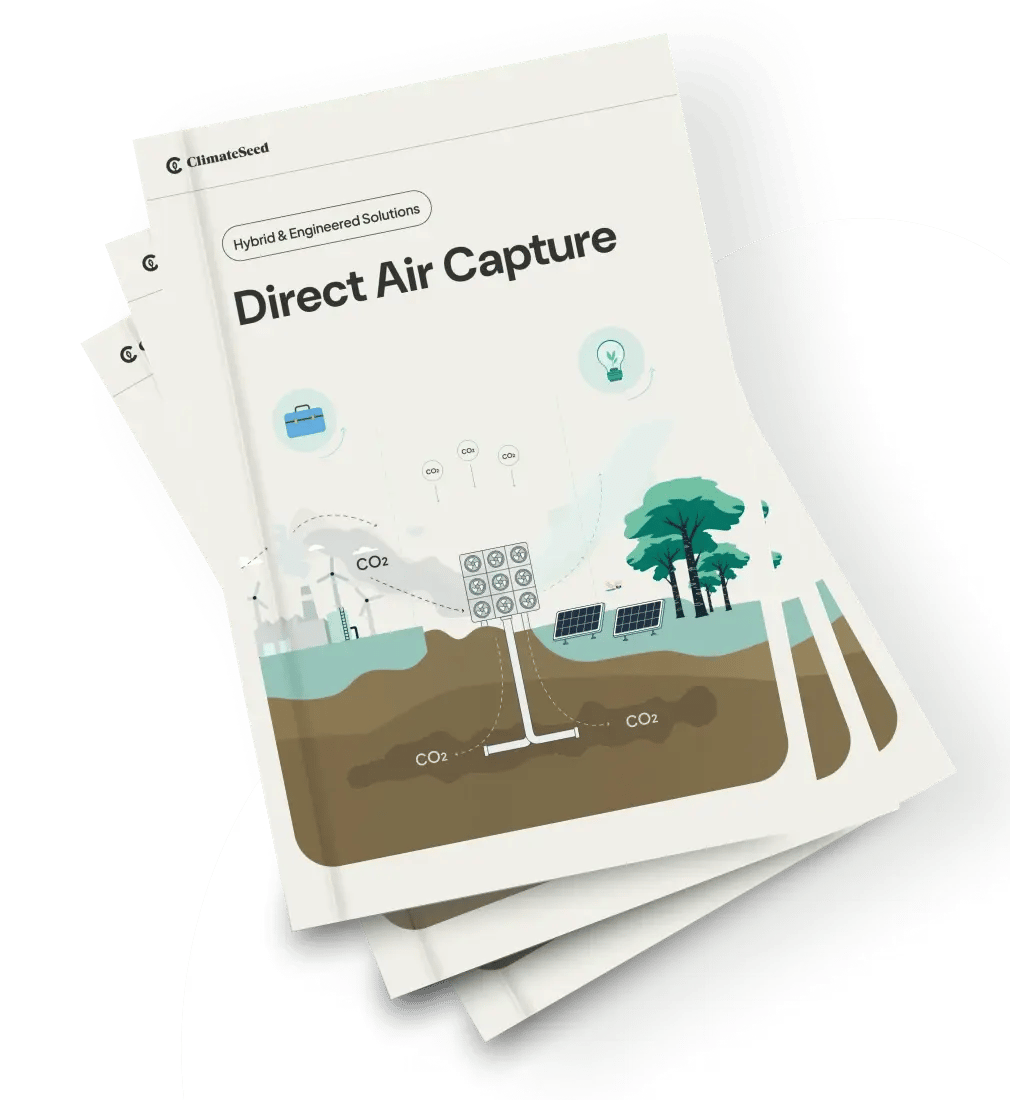
Direct Air Capture
 Carbon Removal
Hybrid & Engineered Solutions Projects for Corporate Net-Zero Strategies
Engineered carbon removal projects are an emerging category within corporate net-zero strategies that use technological solutions to remove carbon dioxide directly from the atmosphere. Direct Air Capture (DAC) projects play a key role within this space by using advanced systems to extract CO₂ from ambient air for permanent storage or utilization. Beyond climate mitigation, these approaches represent a scalable pathway for durable carbon removal and complement both nature-based and hybrid solutions within broader decarbonization strategies.

 Projects in Global Portfolio
 Locations

Company impact
By integrating Direct Air Capture (DAC) projects into a broader portfolio of high-quality climate projects, companies can contribute through Ongoing Emissions Responsibility (OER) approaches while supporting permanent CO₂ removal, accelerating technological innovation, and creating opportunities for skilled employment in research and development.
Maximizing Sustainable Impact through Direct Air Capture
 Emission reduction type: Removal
 Risk of reversal: Low
 Permanence: +1,000 years
 Price range: From €350 to €1,000+
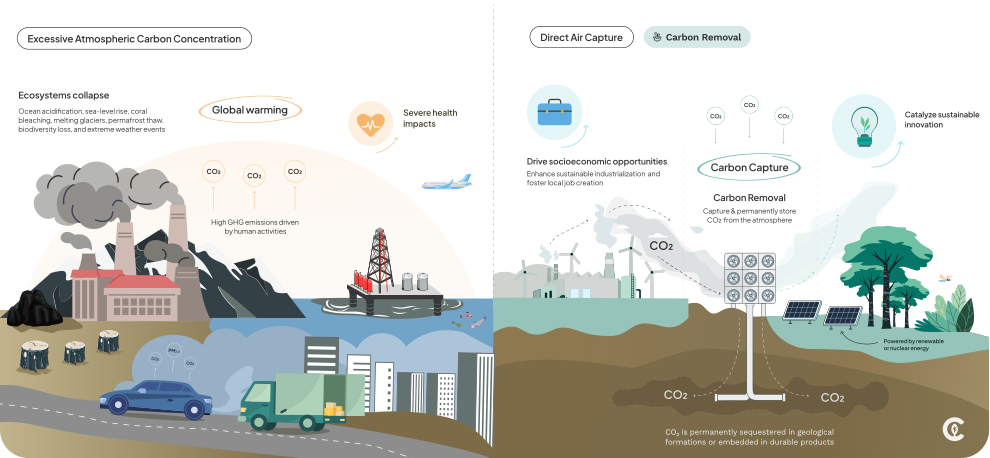
DAC projects use chemical or physical processes to remove carbon dioxide directly from the atmosphere, typically through large-scale facilities equipped with fans, filters, and sorbent materials that bind CO₂ molecules. Once captured, the CO₂ is either stored permanently in geological formations deep underground or converted into long-lived products, ensuring it does not re-enter the atmosphere.
Although still at an early stage and currently energy- and cost-intensive, DAC is gaining momentum as a durable carbon removal solution with strong potential to scale, particularly when powered by renewable energy and integrated into broader carbon management systems. These projects focus on removing CO₂ already present in the atmosphere and are considered a key pathway within engineered carbon removal approaches.

Driving Emissions Reduction & Innovation Opportunities
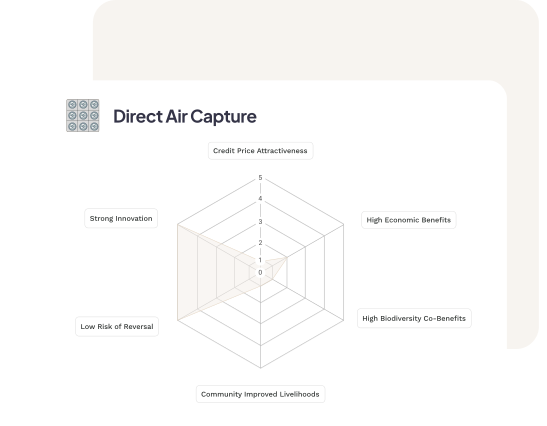
Direct Air Capture projects generate vital co-benefits that stimulate high-tech economic sectors, accelerate technological innovation, and foster specialized workforce opportunities.


Environmental
Maximize permanent CO₂ removal from the atmosphere.

Social
Accelerate technological innovation, create high-skilled employment in R&D, and foster advanced financial opportunities.
Why Integrate Direct Air Capture Projects into your Corporate Climate Strategy?
Integrating Direct Air Capture (DAC) into a broader climate contribution strategy allows companies to support durable CO₂ removal through a technology with a low risk of reversal. Although currently characterized by high costs and limited near-term economic, social, and biodiversity co-benefits, DAC has strong innovation potential and offers an emerging approach to atmospheric CO₂ removal.
These projects also stimulate technological innovation, support research and development, and create opportunities for specialized employment. By supporting DAC, companies can contribute to the development of advanced carbon removal technologies while diversifying their climate project portfolios and helping scale solutions for long-term climate action.

 Expert Insight
Direct Air Capture projects offer companies a direct and highly measurable way to support durable carbon removal. By using advanced technologies to capture CO₂ from the atmosphere and store it permanently, they provide a scalable solution for addressing residual emissions and advancing long-term climate goals. Beyond carbon removal, corporate support helps accelerate innovation, scale critical carbon management infrastructure, and drive the development of next-generation climate technologies
Alessandra Souroujon
Head of Project Portfolio
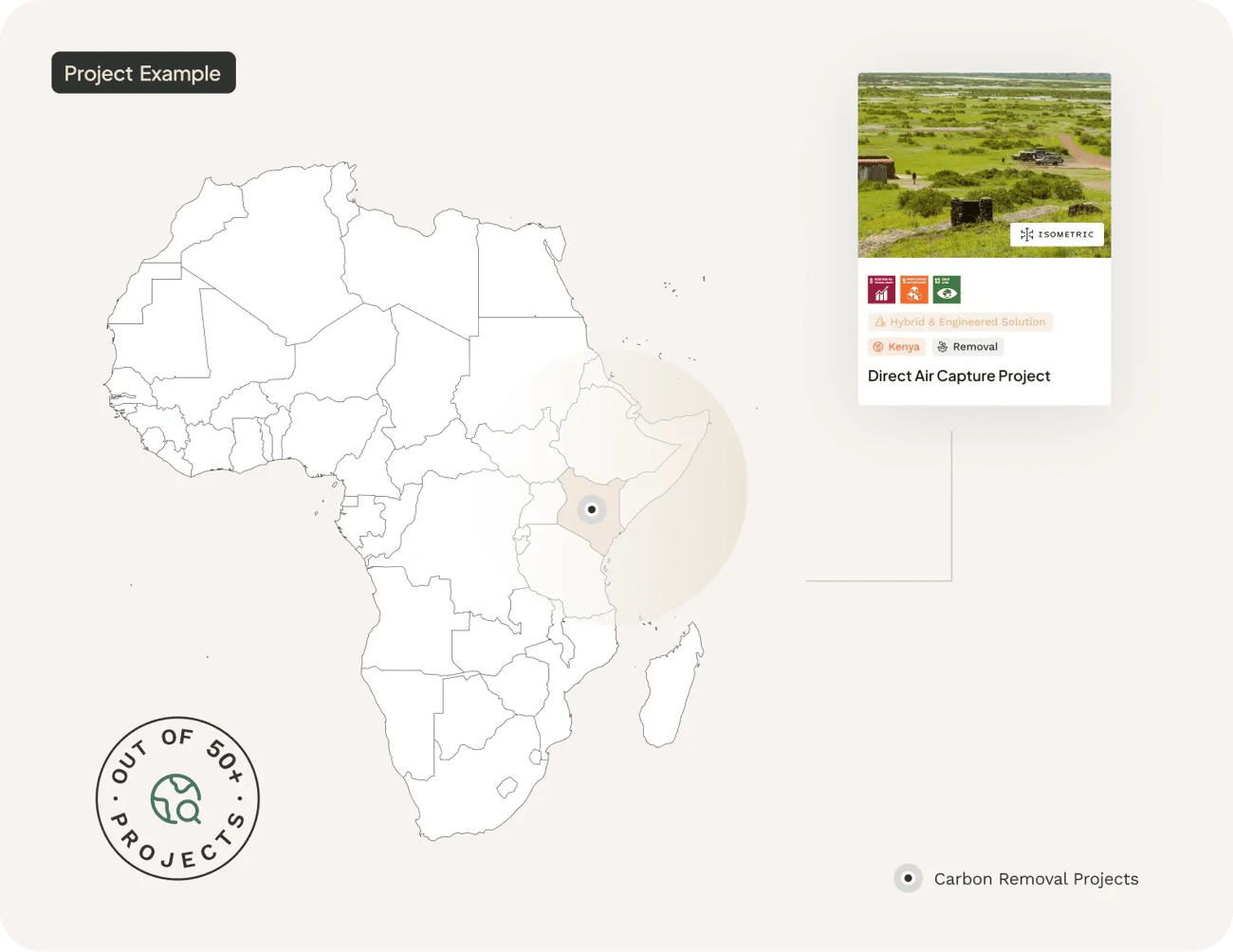
Project Example

Direct Air Capture Project in Kenya
Carbon Removal Direct Air Capture
This DAC project uses a modular unit, powered by on-site renewable energy, to remove CO₂ from the atmosphere and store it permanently in basalt through mineralisation, while also delivering local co-benefits such as renewable infrastructure, water access, and community employment.