Cookstoves
 Carbon Avoidance
Household & Community Devices for Corporate Net-Zero Strategies
Household & community cookstove projects not only avoid carbon emissions by replacing traditional open-fire stoves with clean or improved alternatives, but they also generate a wide range of social and environmental benefits. By improving wood efficiency and reducing smoke, these projects enhance indoor air quality, preserve forests, save families time and money, and empower women who bear the burden of cooking and wood collection.
Beyond their climate impact, they foster gender equality, health improvements, income generation, knowledge sharing, and stronger community engagement.


 Projects in Global Portfolio
 Locations

Company impact
By integrating cookstove projects as part of a broader portfolio of high-quality climate projects, companies can contribute through Ongoing Emissions Responsibility (OER) approaches while expanding access to clean cooking, thereby addressing urgent health crises, and transforming families’ livelihoods.
Maximizing Carbon Impact through Cookstoves
 Emission reduction type: Avoidance
 Risk of reversal: Low
 Permanence: Years to decades
 Price range: From €5 to €20
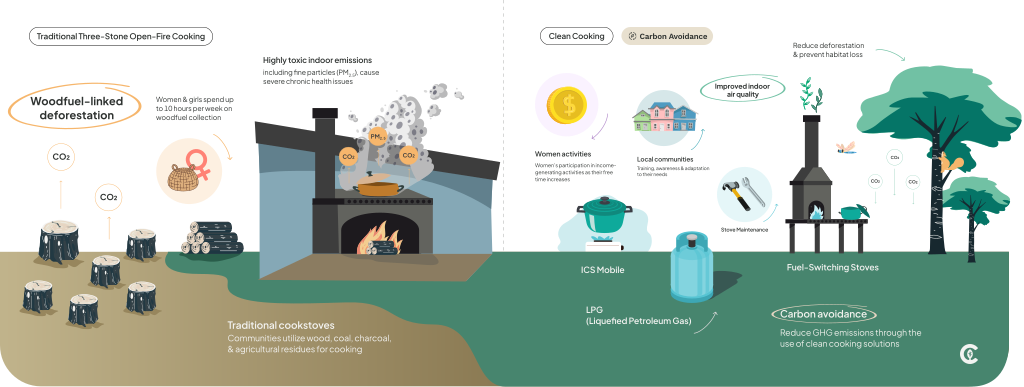
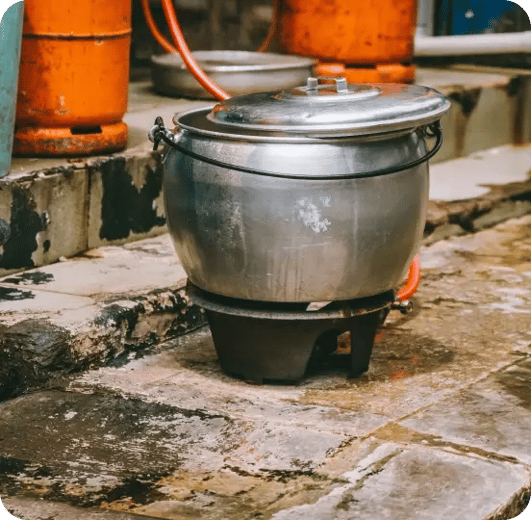
Clean cookstoves refer to a range of technologies designed to meet the World Health Organization’s guidelines for indoor air quality, including improved cookstoves (ICS), liquefied petroleum gas (LPG) stoves, and fuel-switching models that use cleaner energy sources such as biogas, ethanol, or electricity. These solutions replace traditional cookstoves, which typically burn biomass like wood or coal over open flames, producing large amounts of smoke and harmful pollutants that affect both household health and the wider environment.
By transitioning to cleaner and more efficient cooking technologies, these projects reduce CO₂ emissions, lower pressure on forests through decreased fuelwood demand, and significantly improve indoor air quality. They also generate important social benefits, including time and cost savings for households, expanded access to clean energy, and improved livelihoods. In particular, they help empower women by reducing the burden of fuel collection and cooking, freeing up time that can be reinvested into education, income-generating activities, and community life.

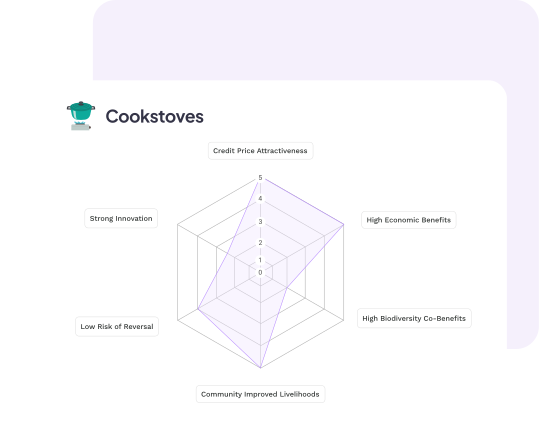
Protecting Forests & Community Well-being
Cookstove projects generate important co-benefits that strengthen social integrity, support local communities, and prevent biodiversity loss linked to deforestation.


Biodiversity
Prevent biodiversity loss linked to deforestation.

Environmental
Reduce pressure on forests, protect soil and water resources, and avoid CO₂ emissions from burning wood or coal as fuel sources.

Social
Improve health through reduced indoor air pollution and enhance local communities’ livelihoods, foster women’s empowerment through significant time savings.
Why Integrate Cookstove Projects into your Corporate Climate Strategy?
Integrating cookstove projects into a broader climate contribution strategy enables companies to support the reduction of CO₂ emissions from inefficient traditional stoves while delivering a wide range of social and environmental benefits. These projects deliver impacts beyond carbon mitigation by focusing on social outcomes and improving the quality of life for many diverse communities.
For companies, these projects provide an opportunity to support the scaling of essential solutions for climate action, community adaptation, and sustainable development. Their contributions expand access to clean cooking, addressing urgent health challenges, transforming families’ livelihoods, empowering girls and women, unlocking household economic opportunities, and strengthening regional resilience against environmental degradation.

 Expert Insight
Cookstove projects are among the most impactful household and community-based solutions for climate action today. By replacing traditional open-fire stoves with clean, efficient alternatives, we avoid carbon emissions while improving indoor air quality, reducing deforestation, and saving families time and money. Done right, these projects deliver climate mitigation and social co-benefits, empowering women, enhancing health, and supporting stronger, more resilient communities.
Danielle Parkinson
Carbon Project Analyst
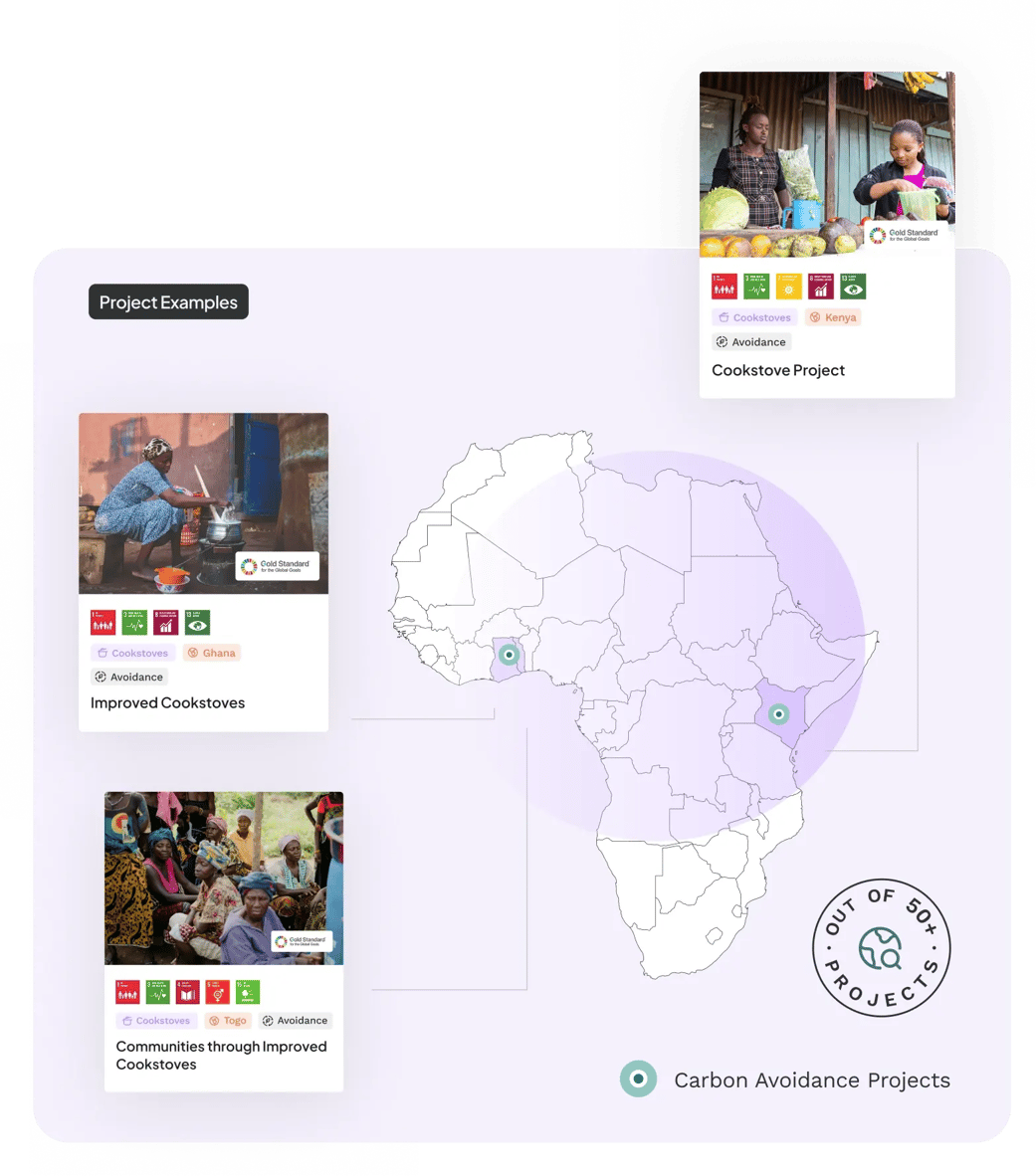
Project Examples

Cookstove Project in Kenya
Carbon Avoidance CookstovesLPG Stove
This stove offers a cleaner, more efficient alternative that directly addresses these challenges. By cutting fuel consumption and improving indoor air quality, it delivers a triple impact: lowering household expenses, protecting forests and improving health outcomes.


Improved Cookstoves in Ghana
Carbon Avoidance Portable Improved Cookstove
Improved cookstove projects have a direct and positive impact on local communities. They benefit households, especially women, by making meal preparation safer. In addition, they generate local jobs through the manufacturing, distribution and maintenance of the stoves.

Communities through Improved Cookstoves in Togo
Carbon Avoidance Fixed Improved Cookstove
In rural Togo, nearly all families rely on traditional three-stone fires for cooking. Wood collection in Africa also drives deforestation, increasing the risk of flash flooding, and is a dangerous and time consuming task that disproportionately affects women and young children.