
Biogas Development in China



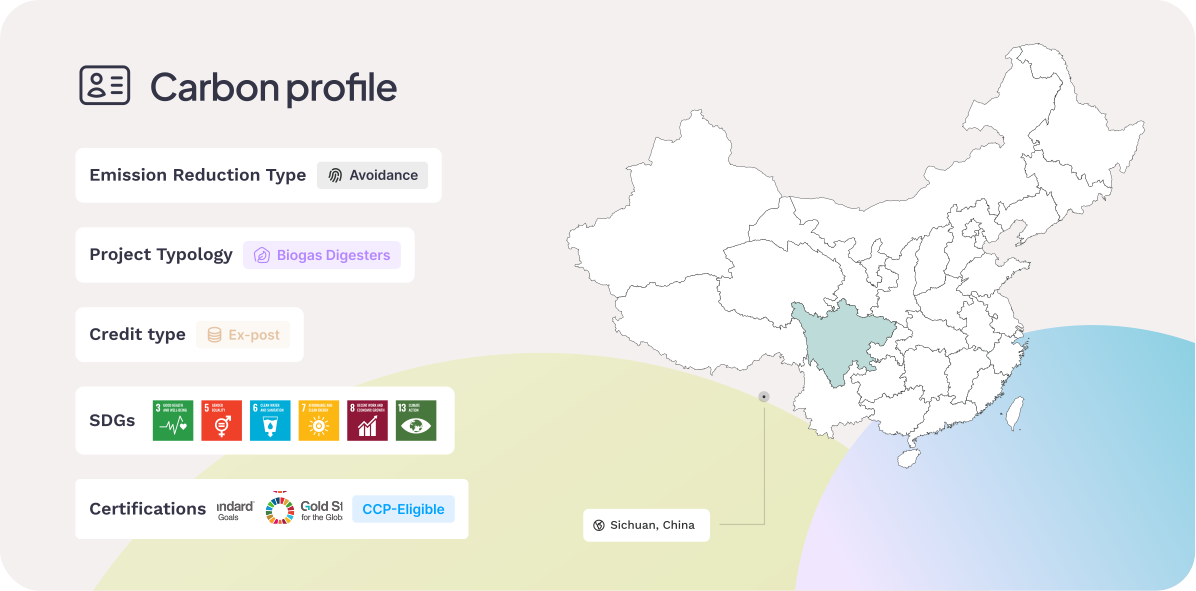
Biogas in China: A Superpollutant Mitigation Project
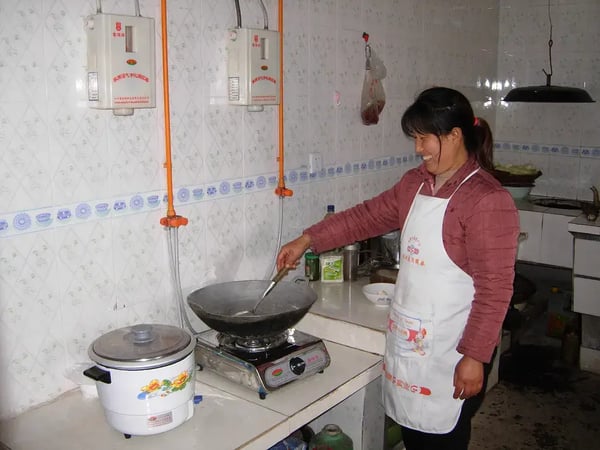
The superpollutant mitigation project aims to support up to one million low-income rural households in Sichuan, China, with advanced biogas digesters and smoke-free biogas cookstoves, which are installed and maintained by local technicians. The small-size biogas digesters tanks are fed with animal manure, previously just discharged into deep pits, and converted into clean and affordable biogas to be used conveniently for cooking, heating, or lighting instead of coal and firewood.
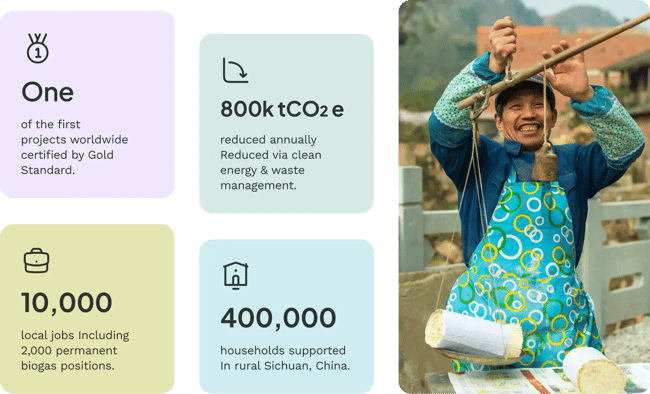
After switching to biogas, each participating smallholder farmer family saves about 2 tCO2e of methane and carbon dioxide emissions every year. At present, this project substantially improves the lives of nearly 400,000 rural households and avoids approximately 800,000 tCO2e per year. Celebrating 15 years of the project, the project has achieved 7.8 million tCO2e emission reductions throughout its crediting period.
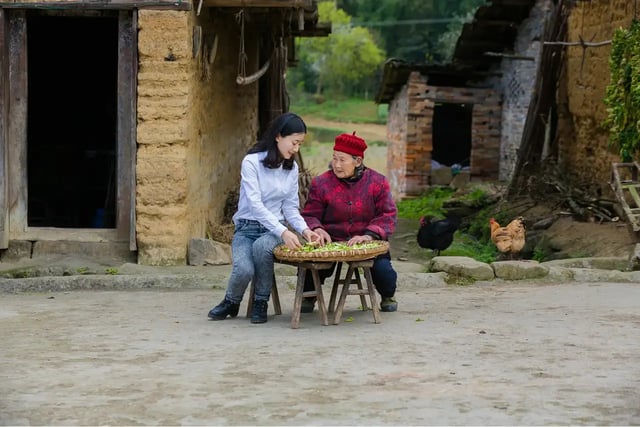
16 Years of Impact to Support Smallholder Farmer Households
The rural areas in Sichuan Province have been among the least developed in China. By 2010, the average annual per capita income for poor farmer households in Sichuan was approximately 500 euros, and the province contained 43 counties that had been officially defined as national poverty counties in order to qualify for economic assistance from the government. Sichuan is also highly vulnerable to natural disasters. In 2008, a heavy earthquake claimed the lives of nearly 70,000 people and left another 4.8 million homeless. In addition, an estimated 12 million animals of productive livestock were killed during this devastating event. In light of this event, German project developer UPM (Umwelt-Projekt-Management GmbH) decided to support as many smallholder farmer households in Sichuan as possible to overcome poverty while contributing to climate change mitigation. Two years later, they started developing the carbon project.
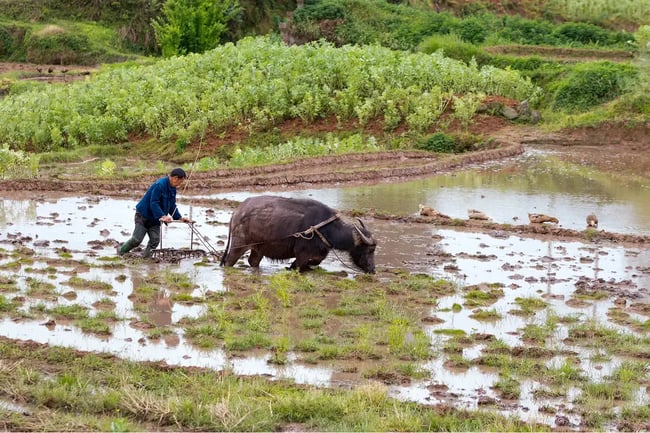
The Superpollutant Distinction
The project conservatively estimates its emission reductions, as it only accounts for avoided carbon dioxide emissions due to the fuel switch from coal to biomass and avoided methane emissions from digester treatment of animal manure while excluding any reduced combustion in biomass. Methane is considered a superpollutant because its 20-year Global Warming Potential (GWP) is 80 times higher than that of carbon dioxide. This means that even small amounts of methane can cause rapid spikes in global temperature. The impact of methane emission reductions is crucial because methane disappears from the atmosphere relatively quickly, thus providing a "fast-acting" climate benefit. If we cut methane emissions today, atmospheric concentrations drop rapidly, which can slow the rate of warming within a decade.
Key Performance Indicators
This project delivers wide-ranging sustainable development benefits across multiple SDGs, demonstrating how clean energy solutions can drive both environmental and social progress. From improving household health and sanitation to creating jobs and reducing greenhouse gas emissions at scale, it supports a more resilient and low-carbon future for local communities.


 Expert Insight
By turning livestock waste into a reliable source of clean energy, this project demonstrates how climate action can deliver immediate benefits for rural communities. Each biogas digester not only reduces methane emissions, a powerful superpollutant, but also provides households with affordable, smoke-free energy for daily needs. With nearly 400,000 families already participating, the initiative shows how scalable solutions can simultaneously improve livelihoods, strengthen resilience, and contribute to meaningful climate change mitigation. For companies, purchasing carbon credits from this project helps mitigate a potent superpollutant, supports climate commitments, and delivers tangible social impact in rural communities across Sichuan, China.
Alessandra Souroujon
Carbon Project Manager
Collaboration with ClimateSeed: Measurable Environmental, Social & Economic Co- Benefits
UPM has been working with ClimateSeed since our inception in 2018, providing expertize in climate project development and carbon market solutions. One of the first household-based Programmes of Activities (PoAs) worldwide to be registered under CDM and the Gold Standard. Over the years, they have supported the implementation and certification of a range of high-quality carbon projects. This work has delivered measurable environmental, social, and economic co-benefits, ensuring that climate mitigation efforts are effective, credible, and aligned with global standards.
UPM: Leading International Consultancy
UPM is a leading international consultancy specializing in climate and environmental projects. With extensive expertise in carbon market development, renewable energy, and sustainable land-use initiatives, UPM supports governments, corporations, and communities in designing, implementing, and certifying high-quality climate action projects. The company focuses on delivering measurable environmental, social, and economic co-benefits while ensuring alignment with recognized standards, including the Gold Standard and VCS, helping clients achieve credible and impactful climate mitigation outcomes.



Ferrari
The sustainable community & innovative initiative project

Autonomy
The largest trade show dedicated to sustainable urban mobility
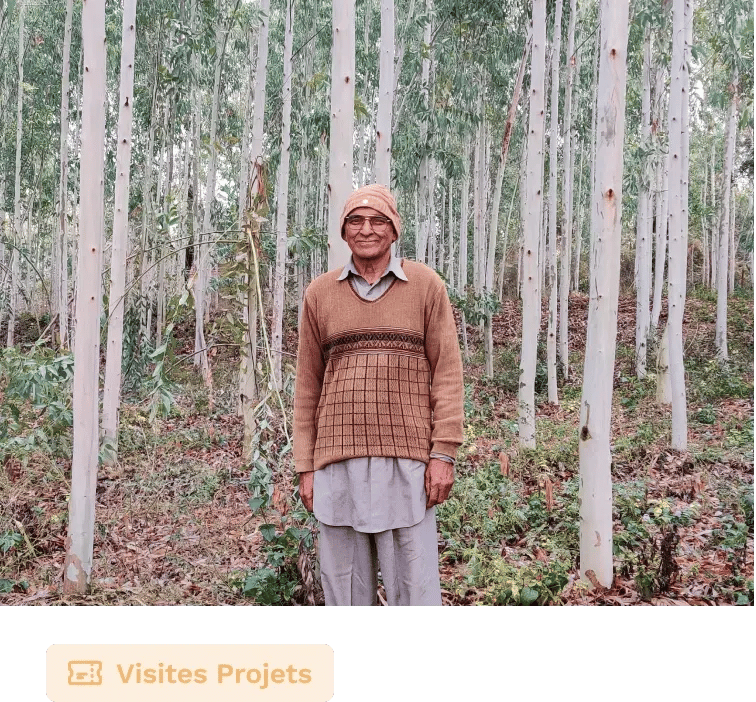
Agroforestry in Punjab
Discover our tour of India
ChangeNow
The biggest event organized for the planet
Women's forum
Highlight the link between climate change and equality

Conservation & restoration of mangroves
Discover our visit to Mexico

Wool and the Gang
The company with a unique approach to craftsmanship

EuroAirShip
Pioneer in sustainable development in aviation

Will Solutions
The company with a unique approach to craftsmanship